Showing posts with label business. Show all posts

Monday, August 13, 2012

Bananaman

When I started writing about my experiences here there were only two other foreigners writing blogs in Busan as far as I'm aware and so it enjoyed a level of mild popularity by virtue of absence of choice. This led to a few invitations to appear on Korean TV and radio shows, and I was also asked to write, but always for airline magazines - perhaps their editors had correctly surmised that I work best with a captive audience.

I always turned these offers down - even though I was invariably assured it would 'help promote my blog' - on the sound logic that I actually didn't want to promote my blog, and I have a face for radio and a voice for writing. Yes, perhaps with enough plastic surgery I too could look like one of those K-pop boy band members which women who are into the whole non-threatening-male-look would like, but it would represent the modern-day equivalent of The Six Million Dollar Man project, and cost about the same.

The other reason for turning down 'a great chance to be on TV/radio/write for people trapped on a plane' is that the offers invariably came in from bizarre addresses at Korea's equivalent of Hotmail such as 'ilikegoats', 'bananaman', 'pussy80' and 'bkmhbdmukkk' with subject lines such as 'This is Arirang TV' to make sure you know it's authentic. So you end up in a situation where Bananaman invites you to some part of the city to appear on a TV or radio programme. You could run a background check on Bananaman but it's time consuming.

It was once explained to me - and it's entirely logical - that since most people here share about seven surnames and most of them are in fact called Kim - it's almost impossible to get anything resembling a sensible email address from your employer because someone's already taken it. The problem is though, I don't think they're even trying. Take the Korea Times for example. It can't have more than a few hundred staff so it shouldn't be anywhere near as difficult to choose an email address, but someone still elects to be 'foolsdie' at their domain name, and that means sooner or later they end up writing a piece about a plane crash where pilot error is suspected and signing it 'foolsdie' at the bottom.

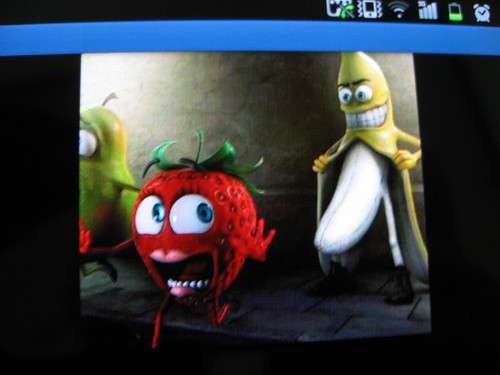
But mostly, Koreans seem to use their personal email addresses for work purposes - and this blurring of the lines extends to phones now, and chat systems such as Kakao Talk. This provides whole new opportunities for sexual innuendo because you can now not only expose your quirky textual inner thoughts but give the Freudians something much more graphic and substantial to sink their teeth into - such as the image below - the Kakao Talk avatar of a male bank employee who contacted my wife to tell her that her new credit card was ready:

Bank Employee's Avatar


Sunday, August 12, 2012

Rogue Trader

When I worked as a financial trader, people used to ask me from time to time about the viability of trading in Korea, and I tried to offer some polite ad-hoc advice elsewhere but I never really brought it onto this blog. This is a pity because the most comprehensive piece I think I ever wrote on the subject was on a forum for foreigners in Korea I later was kicked out of for not posting frequently enough to. The moral of the story – aside from the obvious question of whether you should actually avoid other foreigners and their forums in Korea like the plague – is if you're going to write something useful, put it on your own site.

That said, I'm not promising to make this useful because the first and last thing I'm going to say about trading in Korea is don't, with one caveat – there's a distinction between longer-term investing over a period of years and shorter-term trading.

On a general matter, about half the people I've ever talked to about trading have an idea about the system they will employ to trade. They may even have read books. If you're one of these people and you think you have a system, well, you don't. Sorry to rain on your parade.

It's an oft-quoted statistic that 90% of traders lose money and I've actually read the original research paper - and the figures are as frightening as you might imagine. Worse in fact, because it doesn't follow that the remaining 10% are wildly profitable – some are just treading water. Of course, you can read plenty of books on how to be successful in the world of trading (the real answer is writing books about how to trade).

Anyway, for several years I consider myself to have been a successful trader insofar as I was very much within that 10% to the extent that I paid my bills and funded my lifestyle from trading profits but I wasn't good enough to breeze in and out of the market like one genuinely gifted trader I knew so it all came from very hard work – I put in minimum 57-hour weeks and this is not an exaggeration. You can certainly get yourself over to Birt's EA Review and set your imagination racing but if running forex bots were easy in the long run I think there'd be no need for a site like that in the first place, so if you find yourself beguiled by such things you should also recognise the paradox.

When I was doing my 'Open Mike' segment on Busan e-FM I discussed the issue of Financial Trading in Korea and if you have an interest in this subject you should link off and read the summary for this now.

What's relevant from that particular show is that obviously the first hurdle facing anyone interested in using a Korean broker/trading product provider is the language barrier. The second is that my impression of the Korean market is that it's like the Wild West with rampant ramping of stocks in a broadly long-only product-providing market. That's not to say that you can't make money from it, but you may as well visit a casino. This is just a subjective opinion – although I'm pretty sure I'm right – but what is not subjective is the issue of liquidity and namely the fact that the Korean market doesn't have nearly as much of it as London or New York. Yes, the newspapers here will sometimes claim otherwise and I admire their unceasing efforts at assisting Korea's attempts to continue performing public fallatio on itself, but you probably shouldn't watch or try this at home.

The next problem is that because Korea's laws are fairly hostile to international financial institutions (it only recently allowed hedge funds to operate in Korea) and because international financial providers have a hundred internal and regulatory rules of their own to comply with, it's actually quite hard in my experience to even find reputable forex providers prepared to accept foreign customers based in Korea. After a considerable effort which involved notarised forms of identification (try pulling off that trick with Korean notaries who can't understand English), I eventually opened up an account and discovered it wasn't possible to transfer money into it from Korea. The conclusion is it's better to open accounts while you're living somewhere else and then operate a don't-ask-don't-tell policy with them regarding your location.

But let's assume you have a broker and can trade from Korea. Your next hurdle is the time-zone. Actively trading U.S. stocks is out because New York is open when you are in bed. I suppose you could play fire-and-forget with some trades and set a few limit orders to buy and sell but it's a risky business and inefficient (for which you can read 'unprofessional'). European opening hours are more Asia-friendly up to a point, although London's 1.30am finishes in winter are still endurance-testing.

Of course, forex offers a 24-hour market five days a week but what they don't tell you is that the best liquidity is still during London-New York hours, and strange and mysterious things often happen during the Asian trading hours. If you're looking at a trading bot with form it may well not account for these shenanigans and if you're rolling your own your backtesting will probably represent an ideal you'll probably never attain (I could give you chapter-and-verse on trying to build accurate backtesting results using MetaTrader but the executive summary is forget it).

From what I can tell, shorting is not a tool generally available to Koreans so most people trade the kind of dubious "theme stocks" that are so Wild West they might even put London's AIM market – which actually has been described as a casino – to shame. Many Koreans have traded Equity Linked Warrants (ELWs) but the Financial Services Commission wants to ban short-term trading in them. It may be just as well though because warrants with maturity dates (assuming the ELWs do) generally benefit from a knowledge of the Black-Scholes model and where offered to small investors they are – in my opinion – usually 'designed' (cough) to transfer money from said small investors to the issuers of the warrants (cough cough order book manipulation cough cough). I really must see a doctor. It also seems the market in Korea is imploding because it was more directly manipulated.

And even if I could understand Korea perfectly and had the tools at my disposal to trade Korean stocks, the conclusion I've drawn from my extensive reading of Korean news and personal experience of dealing with people here professionally is Korean business and political life is permeated by a intriguing kind of 'moral pragmatism' which would discourage me from wanting to invest in them.

For what it's worth 'Financial Hub Korea' – which is inexplicably marketed under the obfuscated title 'Fn Hub Korea', is pressing on in its tireless mission "to promote Korea as an international finance market" (or perhaps that should be "an international fn market") so perhaps one day things will get better and I sincerely hope they do, but in my limited experience Korea is hostile to the international movement of capital, I'm convinced from my reading of the news that it's hostile to foreign companies (to be fair like America and Canada also are), and it's hostile to domestic financial speculation of all kinds including the evil 'property speculators' that had the temerity to buy property in Pyeongchang before it won its Winter Olympic bid. How very dare they. (And they still aren't very keen on foreigners owning property – a long personal story for another time).

Ironically due to the hypocrisy around which so much of political life in Korea revolves, property speculation is such an important national pastime here that I'm sure they would actually make it an Olympic event in time for Pyeongchang if they could. Korea might not win gold but they might at least be in with a chance - the earnings-to-price index of salaries to property is eye-watering compared to my own country, where it is considered high.

It's a shame about all this regulation and sniffyness because the idea of Korea being a 'Fn Hub' in this region of the world isn't perhaps quite as utterly absurd as it first seems – nobody really trusts the Chinese financial markets and Japan evidently can't run a stock exchange to save their lives.

So my personal conclusion is – and I did say I'd end on this – is don't trade Korean financial markets.

Thursday, June 14, 2012

Under Siege: Come On! Come On!

I’m alone in the apartment and receive a call from an unknown number on my mobile. I don’t answer it because my son has only slept 30 minutes all morning, he’s just woken up, and I’m desperate to get him back to sleep again so I can do something productive in the little time this will afford me. To this end, I’m walking circles around our lounge with him in a sling on my back, which is the only way of getting him to sleep, at all, ever.

The same number phones again exactly one minute later. This time I answer it, because it's entirely possible that it might be important.

Allegedly it’s Kookmin Bank - KB - and I say allegedly because of the number of phishing frauds which are perpetrated on Koreans from both within Korean and beyond, by which I mean China. The woman launches into a long sentence about something or other but it doesn’t sound like a sales call because it doesn’t sound like she’s just ingested helium, and she doesn’t make the well-practised corporate giggle like the kind of 18 year-old girl normally given that kind of job. I know what you’re thinking - is there such a thing as a corporate giggle in Korea? Yes, there is.

She tells me my name - badly - but it’s vaguely recognisable as my name, and I say yes, hoping she might switch from the Korean she’s been using so far, to English. But she launches off into a long Korean sentence so I stop her. “Jam shi man yo”... please wait a moment. And I tell her, “I’m a foreigner, I don’t speak Korean, so I don’t understand what you are saying.” So she starts again, probably from the beginning, in Korean. I try again, in Korean, slowly “I. Don’t. Speak. Korean. Therefore. I. Don’t. Understand. What. You. Are. Saying.” This at least solicits some kind of “Oh, you don’t understand?” “No”. So she explains again. In Korean. Over my “I don’t understands”.

But then she changes strategy. She tells me the branch of KB she’s from, and it is a branch I’ve dealt with, which makes it feel like it’s not a phishing call, although nothing short of being in the bank talking to them is likely to convince me because I’m naturally suspicious. If I don’t trust myself why should I trust anyone else? Then she says “ID cardeu, passport”, but while she might be requesting details I’m never going to give her, there’s no context, so I simply tell her I don’t understand again, but she says “ID cardeu, passport” a couple more times with increasing urgency and frustration.

I am also long beyond frustration, and I change strategy. In Korean I tell her, “I don’t understand. Therefore my wife will phone your branch later.” I thought this would provide her with the resolution she so badly needed, but it didn’t. Off she launches again into another round of indecipherable Korean. So I tell her again “I don’t understand. Therefore my wife will phone your branch later.” This is exasperating.

Then the surprise. In evidently frustrated English and a rather aggressive tone universally recognised the world over as listen-you-stupid-foreigner, she suddenly says “Come on! Come on!” My mouth and fingers know me well enough not to wait for orders in such circumstances. It took my finger about a tenth of a second to hit the “End Call” button at and I simultaneously heard my mouth say “Frak you” or words to that effect. I support their actions.

Later it transpired that I had a million won in a savings account that had matured. In case that sounds impressive let me put it into context – at the rate the power in our apartment mysteriously bleeds away into the surrounding atmosphere it will soon be about the cost of one month’s electricity bill. The money was put into the savings account to act as a guarantee for my credit card with the bank (making actually not a credit card with the tiny limit I’m given) because I’m a foreign criminal who otherwise might run away with their precious frakking card and go crazy with it in China with a couple of $3 hookers or something. And that is the reason by the way (not the hookers – the fact that KB don’t really trust foreigners with their credit cards).

So the million had matured from the ultra-low interest guarantee account which had earned me as much as an entire hooker worth of interest in a year, and apparently the staff member who phoned me had noticed this - three months later - and decided that I very urgently and immediately needed to find a new home for it, and certainly after her phone call I had a pretty good idea where I wanted the bank to shove it.

When my wife came home I related the story and she immediately phoned the caller at the bank. At first she denied it, so my wife asked “Are you calling my husband a liar?”, after which she finally admitted it and apologised for losing her temper and the whole “Come on! Come on!” business. One small step for a foreigner, one giant leap for Korean banking - I still need to provide cash deposits to guarantee my credit card though.

Friday, September 09, 2011

August Rush: The Web Job

Tho' much is taken, much abides; and tho'
We are not now that strength which in old days
Moved earth and heaven; that which we are, we are;
One equal temper of heroic hearts,
Made weak by time and fate, but strong in will
To strive, to seek, to find, and not to yield.

"Ulysses", Alfred Tennyson

I always liked that poem, especially those final lines. I learned something shocking during my early days in corporate life and public office. Most people are basically apathetic and most people actually don’t know what they’re doing. So the secret to success in life is generally to give a damn and know your stuff. That might sound deceptively easy, but most people are lazy, so it means that all you often need to do to pull ahead in life is to go the extra mile and put in some of those twelve-hour days I regularly work. Of course, if you want a healthier work-life balance, you’re not going to do that, and for all I know maybe you’d be right not to. In fact, I think you probably are.

As I’ve got older, the lines in that poem have increasingly summarised my life. Towards the end of my time as an elected representative serving 9,600 constituents I wondered if everything I would do professionally after it would seem like an anti-climax – it did – and before long I ended up in a job that, anti-climactic or not, paid such a lot of money really that nothing was ever likely to surpass that either, unless I progressed into upper management, a near impossibility for an IT person in the medical corporation I worked for.

So I’ve done my own thing past my peak, including working around the three years of my professional life that Meniere’s Disease wiped out, and actually I’m not sorry about much – but it has left me feeling like I’m a highly determined person blowing on the embers of past achievements. And while I know who I am and I know what I’m still capable of, my years out in the career wilderness working for myself means that I’m a riskier hire. I have to rebuild my resume. In Korea. Somehow.

It was becoming apparent that even with my TESOL qualification, getting a foot in the door of the English teaching circuit in Korea wasn’t going to be entirely easy. I was logging into Koreabridge every day and I applied for my first position, a short-term role teaching Business English, which I thought there might be a least a little chance of progressing with given that relative to some people, I have around sixteen years of business experience. Still, I wasn’t surprised when I didn’t get an interview, because I’m feeling my way in the dark here with almost no expectations. As far as teaching is concerned, I probably have to work my way up from quite a low level, and I suppose Business English jobs probably go to more experienced teachers, not experienced business people, even ones with TESOL certificates.

So the upshot of everything which has occurred recently is that I’m down on my luck, with a baby and an apartment to support, unemployed with only savings rather than income to pay the bills and career prospects that look about as attractive to me as the front of a subway train. I was desperate to find something outside teaching, but I knew it was probably impossible... until the fifth day of my Koreabridge search, when a job was advertised for a web developer with an F-class visa living in or near Haeundae, which at the time felt like a highly unlikely combination of attributes to find here in Busan amongst the relatively small expat community.

The academic institution concerned - which is reasonably well-known - didn’t seem to have much in the way of expectations either, because they offered training for any candidate who was at least IT-literate. Yet here I was, a Computer Science graduate, former software and Internet developer with years of experience, a co-founder of two serious dot-com start-up companies behind me and a couple of mildly popular British websites to my name, which were still running, and which I thought nice and publicly demonstrated my proficiency in HTML, JavaScript, MySQL and PHP along with other equally relevant technologies they ought to want. I hadn’t kept up with some of the more peripheral or specialised tools in the way I once did, but I never let my core skills lapse - aside from anything else I’ve been developing my own desktop and intranet systems over the years to support my trading. Old habits die hard.

My wife saw the job first and told me excitedly “you have to get this job”. And when I looked at the details, I replied that if I didn’t there really was no justice in world, although my answer may have used slightly stronger language. It felt like the Universe, having gone through a phase of persecuting me – things haven’t really been working out in recent months - was now offering me a break; the job was perfect for me, I believed I was perfect for it, and it came at a time in my life when I really needed it. And what was so perfect you couldn’t even make it up, was that six members of the institution’s management were British, so for once I didn’t even have to worry about the disadvantage of not being a “North American passport holder”.

I saw the job on Friday and I spent the weekend brushing up my technical skills and analysing their website, which had issues, thinking about how it could be improved and developed to meet their business goals while applying a user-centred design approach. It was good preparatory work and while I was excited and I didn’t get too carried away, because I know my days of being a well-paid software engineer are long behind me. Now I have to be grateful for finding any job in Korea I can use my skills in, which until I’m fluent in Korean and lose ten years off my age are virtually none (age discrimination is a huge problem in computing in England - where 25-34 has often been touted as an IT contractor's prime period - and I imagine Korea’s little different).

Initially I didn’t get an interview partly due to a mix-up about when I was moving to the vicinity of Haeundae, but I made an effort to persuade them to change their minds, which to their credit they did. And despite the fact that it all happened so fast that I wasn’t geared up for an interview in the way I would have been in England – I own one suit in Korea and I took notes with me in an old National Union of Students folder rather than the expensive leather-bound document wallets or attaché cases I used to have back home, I thought I gave a decent interview - not my best - but then I was also feeling really ill, and not just because I wanted the job so much - more on that later.

I suppose I’ve been around a bit in the business world. In fact, last time I sat in an interview it was when I was the one doing the recruiting and interviewing. So I knew during the interview that I hadn’t got the job. My wife had gone with me to look at the campus for future reference, and when I met up with her afterwards I told her the bad news. It was a pretty long and depressing journey home for both of us, because it looked like I’d failed in the one shot I had at reviving my technical career proper before I succumbed to the seeming inevitability of teaching English to children, and we both knew how much I’d wanted it to be different.

I’ve been told many times, particularly in the last year as my enthusiasm for working alone and 2am finishes in the financial industry has finally waned, that I should draw upon my experience and find another non-teaching job, because the perception was that being a native-English speaker with an F-2 with my background in software and Internet development gave me a fairly unique selling point in an area that admittedly looked like a narrow market niche in Busan. But I discovered that the the institution I'd applied to had been overwhelmed with apparent talent and experience, so as much as anything it was depressing to discover that I probably didn’t have any apparent unique selling points after all, at least not in the activity commonly referred to as ‘web design’, so that illusion was shattered.

I suppose for a brief moment I felt the Universe was setting me up to give me a break, but it turned out that it was just setting me up, because indeed, I didn't get the job.

It transpired I did have one unique selling point - my experience in the field of web-based databases -  So the institution suggested they might employ me to work on something else, but it didn’t sound very hopeful at the time.

When you miss out on a job in your own country, you know another will come along shortly, but given the dearth of positions in my professional field here, it felt like I'd just missed the last bus home - leaving me stuck where I am, which is probably on the verge of becoming an English teacher. And with it this country moves a step closer towards turning me into to person it wants me to be, rather than me finding my own way in life here through having a plurality of options.

John F. Kennedy once said that "True happiness is the full use of your powers along lines of excellence in a life affording scope." That's a definition - if you hold it to be true - that raises a lot of unhappy questions in Korea for an expat in my position.


Wednesday, September 07, 2011

August Rush: A New Home and a Financial Setback

Since I last wrote I feel as though I’ve lived another lifetime and I’ll forever call it August 2011. It’s hard for me to explain recent events in my life in a short narrative so over the next few days I’ll post a series of entries under the theme of my ‘August Rush’.

My wife and I decided to buy an apartment. Since we returned to Korea we’ve lived with her mother, and that had both its emotional and logical reasons, but it changed the nature of our relationship and not for the better. Summer tends to be the slow season for apartment hunting in Korea, for the very good reason that people don’t want to hike around in the unbearable heat as I have just spent the last month doing, and with prices of apartments in Busan rising at a bubble-like pace, we were watching our relocation options dwindle by the month. We had to take advantage of any lull there was.

I became a full-time financial trader in December 2004, and I was quite successful for a few years, but since my wife stopped working alongside me last year - providing an all-important extra set of eyes and second opinion - my profitability just ebbed away and my heart wasn’t quite in it any more. I sat alone in my office trading London hours into the early hours of the Korean mornings, I wasn’t getting out of the apartment much at all, so I was failing to learn the Korean language. And the relentlessly negative financial macroeconomic environment of the last few years began to take its toll on me, because in the end I found it doesn’t matter whether you’re winning in the market if the constantly depressing news environment just wears you down. I started doing a weekly radio segment on Busan e-FM during trading hours just to get away from things, an unthinkable move during more motivated times.

But the end of my career as a trader in August came quickly. I have a rule that if the running annual total of my profits falls sufficiently below the level I could earn from a normal salaried position, then I have to accept that I’m in the wrong job. When you’re ‘in the zone’ in trading, as we call it, you feel untouchable, but when you’re not it’s easy to see extended runs of losses, because this is an activity where studies have suggest 90% of participants consistently lose money. When you find yourself in that 90%, when general market conditions seem no longer aligned with your trading style, you have to find something else to do with your life. And while it would make for a great narrative if could say I’d suffered a major financial blow-up, really it’s been more of a setback, albeit a significant one.

The culmination of my minor financial crisis was connected with the search for an apartment. I’d done a radio segment about ‘the gravitational pull of Haeundae’, and like a lot of Koreans in Busan I felt like I had to be there, but not just out of the need to climb the property and perceived social ladder; the two prominent foreign schools - Busan Foreign School and Busan International Foreign School - are both in the area, and with the prospect that this is where my son needed to go one day, we were planning ahead. But Haeundae is expensive, and it seemed like we had a choice – buy a nice apartment in a good area, or a bad apartment in a good area. We started looking around and it only seemed to make that choice seem even more stark.

I’d seen some nice apartments in Centum City, but they were out of our price range, and yet tantalisingly close enough that if I pushed hard with my trading accounts living there might be possible. So I did something I hadn’t done in a long time – broke my risk management rules, ignored the warnings I’d built into my systems, and went for it. If I failed at least I could say that I met my undoing out there on the ragged edge which so often defines who you are as a person. In earlier and more reckless times as a trader I’d done the same thing, and I’d always come out of it on top, but not this time. My decision came just days before the market entered a particularly high period of volatility, and in trading parlance, I was long when I should have been short and short when I should have been long. By the time it was over, I’d lost quite a lot of money and Centum City was no longer tantalisingly close but instead an even remoter dream.

You live by the sword and die by the sword as a trader. I knew what I was doing, I let frustration and impatience get the better of me, and now I have to pay the price. That was my first financial disaster. My second may be buying the apartment itself, because I’m convinced that Busan is in the midst of an unsustainable property bubble that could entirely conceivably implode in on itself at any moment. But we urgently needed a place to live, and rather presciently as it turned out, while watching what was happening in the international financial markets and the Korean construction sector, I predicted that Korean banks might stop lending, as banks in the UK had a few years earlier, excluding a generation from the dream of home ownership.

In fact when we were arranging our loan, in a remarkable and frightening admission the bank manager told us that he couldn’t guarantee the bank would still be willing to honour it at the end of September when it was supposed to be released. Despite this, it wasn’t certain then that the turmoil in the financial markets would translate into real-world actions, but just days after we arranged to buy our new apartment, the Korean banks made their move as I’d believed they would, but much sooner than I expected.

Wednesday, July 20, 2011

Busan e-FM Week 34: Brands, Counterfeiting and Piracy

The english waves come inAbout 'Open Mike in Busan'

Background

A week earlier while I was waiting to go on air at the station, a situation was posed which led me to say “But that would be unethical”. I needed to repeat that last word a number of times. We quickly established that the English word ‘ethical’ may sound hilarious to Koreans. I wasn’t entirely convinced that this was merely a phonetic issue, which resolved me to pick a topic related to ethics for this week’s show.

Whatever I talk about on the radio, above all else I’ve been told that it has to be entertaining, so it’s fair to say I peppered the segment with the word ‘ethical’ on the principle that if it makes people laugh, instant comedy. I’ve also experimented with the word ‘morally’, but I don’t think the audience is quite ready for it yet, although I’m told ‘contract’ is quite an amusing idea here too.

I wish I was able to communicate with the engineer, because perhaps then we could have set up some canned laughter for every time the word ‘ethical’ was used. That would have been great. Anyway, we decided that ‘ethical’ was the ‘word of the day’.

Introduction

Korea seems to be a country which is particularly obsessed by brands, whether they are real or fake. I’ve always thought it must be something in the Korean psyche – there’s a need to belong to the clan.

The Korean Bag Market

I read in a newspaper that “For Koreans, a designer bag can earn prestige and maybe even a profit.” What that referred to was the fact that in some cases, second-hand prices for these bags are rising above the original purchase price because the price of new bags is rising so quickly.

As a financial trader it reminds me of the stock market – and it does seem that some people in Korea are buying these bags as investments and agonising about waiting to buy them while watching the price move away from them. I think nine times out of ten, when you find yourself in that position, it’s best to let it go. But why do prices keep rising? It seems that from the price differences between Korea and other countries, the brand companies are just raising prices here because they know the market will bear it. They are ripping people off in other words, turning Korea into a bubble-market. [This was especially noticeable when the recent Korea-EU Free Trade Agreement came into effect, and the removal of tariffs were actually accompanied by European designer brand price rises, instead of price cuts]. So Koreans are going overseas to buy these bags instead. [Yes, it’s international designer bag arbitrage!]

The 397 Generation

It’s not as if we don’t have brands in England or the West in general, but there seems to be more trust for them here. I think this is bad economically, because it makes it difficult for new brands to break into the market, and you end up with the chaebol system leading to a lack of choice. Two reasons why this is bad have been in the news recently – large chaebol-built apartment buildings have been accused of poor safety, and then there’s the beer issue. When I got here I kept seeing the same two brands of beer – which largely turns out to be because there are only two major domestic breweries [plus once again, tariffs help]. Korea isn’t a very diverse society but if nothing else you should really have diversity with beer.

Apparently a lot of the brand-worship these days is being blamed on the ‘397 Generation’, who are in their 30s, went to college in the 90s, and were born in the 70s. But from what I see, it seems more like it should be blamed on what I would call the ‘295 Generation’ - 20-somethings with IQs around the 95 mark [logically meaning in England we should probably have a ‘285 Generation’]. Anyway, it certainly isn’t limited to young people, because older people in Korea appear to have an obsession with German cars [specifically, Audis – which mainly men buy – and BMWs, which mainly women buy].

But does this make people happy? In a recent OECD Happiness Survey South Korea ranked 26th out of 34 in the Index, with 36% of South Koreans saying they were satisfied with their life [I don’t know who these people are either because it’s nobody I know here, leading me to wonder how honest the respondents were considering the potential loss-of-face involved in telling the truth]. A lot of it is linked to stress, and a fixation with money [and probably brands by implication]. But I thought a Gallup poll around the same time offered a fascinating insight into Korean life: Koreans aspire to be richer and happier, but apparently they hate rich people.

Faking it

So people harbour a lot of brand aspirations here, and animosity towards those that achieve what they don’t. Perhaps it’s this which leads to the view that if you can’t have it for real, you have to fake it. Making counterfeit items big business in South Korea.

I was surprised when I came here and saw all the counterfeit goods. It’s not as if we don’t have this problem in England as well, but here in Busan they are just out on the street in plain view in districts such as Nampodong. And then up in Seoul you have areas such as Itaewon and Myeong-dong where it’s said that 1-in-10 street vendors are selling counterfeits (and I can’t help thinking that number is probably only that low because a lot of the other vendors are selling food).

But there doesn’t seem to be a great deal of incentive to crack down because it’s good for tourism, with evidence that Japanese and Chinese tourists particularly come to Korea because the quality of fakes here is known to be ‘very high’. And this is the tip of the iceberg, because many more counterfeit items are being sold online.

Does it matter?

Personally I don’t care about bags, and I don’t get paying $1,000 for one. But morally, the business of counterfeiting is unethical [stare into control room]. But then more visible danger is counterfeit drugs; counterfeit goods are a kind of cheat, but counterfeit drugs can kill.

Doing business is an issue – if I were visiting Korea to sign a deal with a company, and saw all the counterfeiting activity going on and that it appeared to be so publicly acceptable, I might think this makes the country and people I’m dealing with in it seem less ethical, like with honouring contracts for example. So I’d wonder, is Korea an ethical or unethical country?

Software Piracy

It also extends to the media industry of course. At PIFF [The ‘Pusan’ International Film Festival], when a message came up saying “No Piracy in Korea”, people laughed. And when I first came to Busan I noticed that while there were shops everywhere, there appeared to be a distinct lack of music, DVD and software stores. Every shop seemed to be running Windows XP Professional though – which is a premium priced version of the Microsoft operating system – and you have to think that the reason is because they’re probably not genuine copies.

I used to be a software developer and I like the ‘open source’ concept but it doesn’t pay the bills. The incentive to build software that would help people in this country isn’t as prevalent as it should be, because there’s no reward if people pirate their software rather than buy. In fact it’s said that piracy in Korea may cost this country around 20,000 IT jobs. [I’ve never been totally convinced by these arguments – it may well cost 20,000 IT sector jobs, but I think the money saved just results in jobs getting shifted elsewhere – admittedly into the service sector which is a dead-end for economic development which Korea shouldn’t want].

The excuse people who pirate always use is that they weren’t going to buy the product anyway, which is undoubtedly true in some cases and undoubtedly false in others. People in Korea don’t seem to care though. I went into a computer store once to ask for a quote on a computer, and was told “we can supply whatever you want – any software... no extra cost.” I actually wanted to buy a genuine copy of Windows – and after overcoming the proprietor’s incredulity he finally laughed and said sheepishly “we don’t have any”.

I think this isn’t isolated because there was a case recently of a large supermarket chain being caught selling pirated software on netbooks, and according to official figures software piracy has reached a five-year high.

You know what really got me about my trip to a computer store? That the proprietor admitted that the one downside of the pirated copies of ‘Windows Vista’ these days is that you can’t update them, which means no security updates and all that implies. But people “don’t really care”. So there’s an ethical issue here but the bigger issue to my mind is security.

Korea’s Digital Pearl Habor

People are taking reckless chances with their online security by running pirated software, because even if you don’t get caught by some downloaded virus, your pirated version of Windows itself may include programs that spy on you, and steal your passwords and bank account details. It’s obviously occurring too because once I was called in to look at a friend’s computer that was ‘running slowly’, and it transpired to be because of the large number of spyware programs infecting the machine.

That’s a practical outcome of these security weaknesses – that to access your bank you have to go through a lot of quite complicated procedures involving digital signatures, and that sounds like it has its advantages on the principle that more security is always good, but it isn’t, because the upshot of the technical environment here is that everyone has to use inherently flawed ActiveX technology and because most people are running pirated versions of Windows which often can’t be updated, everyone designs their websites and security for Internet Explorer 6, which is very insecure.

But where this problem might really manifest itself, is in the field of cyber-warfare, which is already with us, as the attack on Nonghyup Bank earlier this year – which was blamed on North Korea – demonstrates. People often think that if war with the North happens, it’s going to start with thousands of North Korean soldiers rushing over the border, but I think it’s more likely war will begin with a massive cyber attack which, will cripple South Korea. I can see this country very quickly losing its mobile phone networks, Internet, TV, financial, GPS, power and traffic infrastructure. And even if nuclear power plants aren’t connected to the Internet as the authorities in this country claim, the same was true of Iran but foreign intelligence agencies still managed to introduce a devastating virus into that closed system.

North Korea allegedly has 30,000 ‘electronic warfare agents’ or hackers as it is, so it seems optimistic to think they aren’t going to used as part of the initial strike against this country.

So the way I see it, I feat it will be chaos before the first shot is even fired. And that’s the problem. Never mind stealing your bank details, how do you know your pirated copy of Windows doesn’t have a foreign program on it waiting to trigger as part of a cyber attack? You don’t, whether it’s ethical or not, using pirated software might turn out to be a danger to South Korea’s security, whether through war directly or just industrial espionage. Fake bags are not going to bring down society, but the thinking that accepts it, just might.

Links
Busan e-FM
Inside Out Busan

Air date: 2011-06-15 @ ~19:30

Monday, April 25, 2011

Busan e-FM Week 25: Financial Trading in Korea

The english waves come inAbout 'Open Mike in Busan'

Introduction

This week I’m going to talk about my job. I’m a financial trader, and I work for myself.

Provenance

I read recently that seven out of ten Korean people regretted changing their jobs. Clearly there’s a lot of stress here connected with people’s working lives. It’s the same in England. In fact, there’s a word for it in English – we call it the “rat-race”, and it’s a race many people dream about dropping out of. There’s a book about trading by Alexander Elder, which begins with these words: “You can be free. You can live and work anywhere in the world. You can be independent from routine and not answer to anybody. This is the life of a successful trader.” It’s a good opening because it speaks to the dream of freedom and independence people have.

Job stress and the desire for a better life on fairer terms are big issues in modern society, and it’s part of the reason I quit my job working for a company. I think a lot of Korean people can understand the motivation. And as far as trading is concerned, it seems there’s quite a lot of it happening here.

Ants

I was both surprised and appalled to find out how much some Korean people were trading the financial markets. You know, I found out they call Korean traders ‘ants’, and I guess that sums all of us up. When I came to Korea in 2006 – before the Credit Crisis – everyone was talking about their investments, or their funds (‘pundue’), if they left the job to the bank. The percentage gains were enormous – I heard stories of people making 20-30% per year. This is scary... and unsustainable. They’re the kind of gains you usually see before a crash. But even before people lost so much money in the Credit Crisis – I saw TV stories here, and heard stories from my extended Korean social network, of people losing tens of thousands of dollars (or tens of millions of won) in the stock market.

Korean trading TV channels

You can tell it’s a serious business because of the dedicated Korean TV channels aimed at these ‘ants’. We don’t have those kind of TV channels in England. We have Bloomberg, which is a sorry excuse for a financial channel [In the hour running up to the London market opening, Bloomberg UK runs a heavy mix of adverts and sports/entertainment stories to the detriment of reporting on the morning’s corporate news releases]. The Korean channels feature lots of charts and chat-feeds like Twitter with viewer commentary. It’s intense stuff, it’s what trading is really about [sadly], and I think there might be three Korean channels just like this.

Financial trading in Korea

The market here – and the way people trade – seems to be different to England. There’s a lot of actual real stock buying, which means betting on upwards movements only, although there are also Equity-Linked Warrants (ELW) which are quite popular [if it’s anything like ‘covered warrants’ in Europe the deck is probably, by design, heavily stacked against the trader]. It’s easy to look clever in a bull-market with products like this.

I buy and sell financial contracts. In theory, it’s the difference between the price now and the price at some future point in time [but unlike most warrants, they don’t carry exponentially volatile expiry dates]. Think of it as the theoretical ownership of shares in a company, but you never actually own the stock. I might hold these financial contracts for weeks, minutes or even sometimes seconds. I also bet on downwards movements in the things I trade – which is called ‘short-selling’ or ‘shorting’. Overall, it’s not a term I’m fond of, but I suppose you could class me as a ‘daytrader’.

Trade what you know

I don’t trade any Korean companies. When I lived in England, I used to trade the UK and the US primarily, but I can’t really trade the US any more because of the time difference.

The problem with trading Korean companies is mostly the language barrier [although I suspect market liquidity isn’t as great either]. If I used a Korean securities company (or ‘broker’), even if I can overcome the Korean language interface – or they offer one in English – I can’t understand the news. I have to understand what’s happening with what I’m trading [another school of thought in the community differs on this point]. Anyway, as things stand, with my brokers and trading systems, I have no access to the Korean market. I’m not exactly sure why this is – I have access to many other global markets including Japan – but historically I think there have been lots of restrictive laws in Korea which make the whole business rather difficult.

The fn Hub

Of course, Korea has its ‘Financial Hub’ project – or ‘fn Hub’ as they [bizarrely] call it [or as I call it, ‘another fn hub’]. The fn Hub wants to create an environment where “domestic and foreign companies can compete freely (and thrive together)”.

One of the reasons London has been successful as a financial centre is that there is little regulation there. But here there are barriers – for example in foreign banks taking over domestic ones. The Financial Investment Services and Capital Markets Act 2009 broke down some of the regulatory barriers, but the government is still talking about whether to allow hedge funds to operate here – hedge funds [rightly or wrongly] are a fundamental part of the modern system in London and New York.

So some companies can’t operate here, even if they want to. Of the contracts I trade, which include stocks, commodities and currencies, none of my currency brokers will let me have an account in Korea, because of the Korean financial and banking rules. And I understand the difficulties, because my bank – [fn] HSBC – which is a global bank advertising a ‘global account’, doesn’t allow online UK to Korea money transfers. It all has to be done by phone. [I found this important fact out after they’d convinced me to open an account on the basis I could do my global banking over the Internet – which given I specified I wanted it for Korea, they should have known was impossible].

So with HSBC – and other banks I suppose – I can’t bring money into Korea electronically, or move it out. So, no electronic movement of money. I think I understand why this is – it’s probably a legacy of the 1997 Asian Financial Crisis, which created a fear that money moving in and out quickly could lead to a rapid economic collapse. But restrictions are the enemy of capitalism. I’m not ethically justifying this kind of global capitalism – it’s responsible for lots of problems in the world like the Credit Crisis. But it’s the way things are. Modern global capitalism means the free movement of capital, money in other words.

Korea as an ‘Asian Financial Hub’

I think the government here is trying to head in the right direction, and working sincerely towards their goal of making South Korea an ‘Asian Financial Hub’. But clearly it’s slow progress, and I think people have to be realistic about this idea. Look at what you’ve got right now – Singapore and Hong Kong are financial centres of sorts because they use English [for business at least]. Japan is a major financial market because of its financial power and the financial infrastructure it built up as part of that. You get the impression with the ‘fn Hub’ that it’s being talked about as some kind of replacement for these other financial centres. But what’s Korea’s unique selling point?

I don’t see that Korea will ever be the kind of Asian Financial Hub they are dreaming of. First of all, politics is a problem I’m afraid. Can you persuade companies to come here when this country is regularly threatened by an aggressive neighbour? Then there’s the language barrier and the anti-foreign rhetoric which private hate groups and the government regularly engage in [the latest is that apparently Ulleung Island could be 'militarily threatened' by Japan, in addition to the 'foreigners are spreading AIDS' political issue which I've previously mentioned. It's not that Japan is necessarily any less xenophobic of course - but they already have a financial hub whereas the government in Korea is trying to attract foreigners in to build one up].

No more hubs

But the bigger issue might be the whole idea of financial hubs and international financial centres in the first place. These days markets are consolidating, becoming increasingly electronic-only and speed of execution is an issue [high-frequency trading]. In the past, financial traders had to be near where the action was, but increasingly you put your computers there (or actually at the geographical mid-point between two markets) and you sit somewhere else. If anything, one day, there might be no financial hubs of any kind.

Don’t try this at home

I wouldn’t recommend trading as a job. In fact, I wouldn’t recommend it to my worst enemy. Longer term investing can be sensible, although nobody knows what the future is going to bring.

Links
Busan e-FM
Inside Out Busan

Air date: 2011-04-13 @ ~19:30

Sunday, March 27, 2011

One Hundred Mornings

In England we have special days we mark down in our calendars, and when the day is done we move on, perhaps returning to remember them as annual anniversaries. But when I came to live in Busan, I learned that Koreans are counters of days. So whether it be 100 days after your first date, 100 days after your wedding, 49 days after the death of a loved one, 15 days after Seollal, or some other date of note, people are busy counting them off on a calendar, or perhaps more probably now, their iPhone apps. Maybe it’s this mentality which brought us Hadan’s ‘Five days market’, which being every five days essentially ensures that you never know when to go.


Sometimes the counting isn't indefinite though, because when it comes to personal relationships - as my wife so profoundly told me - "once you get married you tend not to celebrate any more."

The 100th day after a baby is born is a significant event in Korea. If it were not for all the other counting of dates, it might be sadly indicative of the historically high rates of infant mortality here, but as it is, it merely seems another manifestation of the need to mark certain intervals on a calendar. Photos must be taken, and much like with Buddhist offerings, it seems necessary to involve a good amount of food. I'd been busy with work, but had developed a suspicion beforehand that my wife was planning a little more than this, given the number of baby-related Internet browsing and phone calls she seemed to be making. Packages started to arrive.

So it was that by the time the 100th day came, the wall of our lounge was improbably covered with a large printed cloth banner featuring our son's name and face along with the legend "Happy 100th Day", surrounded by the entire world's supply of purple balloons. Our son was wedged in a sitting position on the couch, and the table in front of him was filled with fruit and a cake - into which three numeric candles '1' '0' and '0' were placed.


The photos were taken, but in that respect this was merely a warm-up for the big event that was to come.

Sunday, March 06, 2011

Pirates of Silicon Valley

A few weeks ago my computer started to switch itself off randomly. Given the construction quality of our apartment building, coupled with the dubious nature of the electrical system here, I wasn't sure at first what the cause was. But finally I concluded it was probably the power supply unit, and that I’d have to buy another to test out the theory.

I thought that meant another trip to the large computer store in Nampodong. In fact it's not really one store so much as a series of separate businesses clustered together on two floors of a building near the station, and it's a rarity, because for all Busan often feels like a city full of shops, places selling computers are – I think - relatively thin on the ground. When I first came here in 2006 I quickly explained it as being indicative of the high number of 'PC Bangs' where people can go and access the Internet, and allegedly people were also using their phones to surf the Net, an assertion that later I came to doubt because of the high data charges. But before I travelled to Nampodong, I remembered seeing what improbably looked like a small computer store near us and went to investigate, and I wasn't disappointed.

Many years ago I bought my first new computer in the anonymous basement of an industrial air compression company, which served as a metaphor for the underground nature of the home computing market at the time. It was rough, you had to be careful to avoid tripping over some discarded piece of technology on the floor, and it smelt of cheap chemicals heated dangerously above room temperature by questionably built power supplies. So perhaps that's why I took an immediate liking to my local computer shop, because nothing had changed, and 30 PC power supply units stacked on a shelf by the door said I was likely to be going home with what I came for.

Perhaps it's indicative of the nature of crime in Korea that my wife had to shout upstairs to where the proprietor seemed to be living several times to get his attention. So my polite refusal to follow my instincts and start physically investigating the contents on the shelves and floor around me seemed rather redundant under the circumstances. Many shops are like this in Korea and it never ceases to seem bizarre coming from a country where it’s almost second-nature to steal anything which isn't nailed down. In fact, many people dismiss the British Empire as mere colonialism, but it was really organised as more of a global heist - a sort of Ocean's 11,000,000 if you will.

When a computer starts losing power intermittently, you can’t guarantee that the power supply unit is the root cause of the fault. CPUs are designed to shut off when they overheat, motherboard issues can come into play, and even wiring could be to blame, so there was always going to be a backup plan. And there had to be; the computer ran my automated trading bots and they need to be running all the time. So my backup plan was buying a new PC.

Because I ended up doing a lot of research - with time I really don't have - for the prospective new machine, by the time I stood in the local computer store I was able to speak fluent PC jargon so well once again that my wife barely needed to translate my prospective shopping list with the proprietor. I might not speak Korean, and he not English, but both of us spoke jargon. But I'd also been searching around online, a more difficult task than it should be, due to the Korean propensity to use eBay-like (and eBay-owned) sites Auction and Gmarket to buy almost everything, whereas I prefer apparently proper online retailers like Hacker that have their own websites.

A few years ago when I was last looking to buy a PC here, I went into a computer store, and the owner said that if I bought a machine there he'd "load it with all the software". Which software? Anything I wanted. It's a constant source of incredulity here when I explain that I want to buy a copy of Windows, and over the last few years the numerous Windows XP Professional screensavers I've been witness to in shops have raised questions in my mind as to why so many people in Korea woul buy the more expensive copy of XP, when it’s completely unnecessary in a retail environment – the suspicion being that they didn't.

Koreans generally don’t seem to concern themselves with computer security but I do, which is why I never run pirated software on my systems. It's a relatively trivial matter to insert spyware in pirated software installers or even the software themselves. As a financial trader I need to be aggressive about network security. So when I told the owner of the newly found store that I wanted to buy a copy of Windows, and he said that he didn’t have any in stock, a look of surprise completely failed to cross my face. But perhaps it was because I wanted to buy Windows 7 Ultimate, a version of Windows so completely unnecessary for all but the narrowest of niches of customers, that even the salesman at Hacker laughed when my wife asked whether it could be bought with a system.

Unfortunately my inability to buy Windows from the local computer shop meant that I'd have to be ordering that from Hacker, so why not the entire PC at the same time? Sometimes it’s the little details of a PC build that can set things apart, and while Hacker’s choices weren’t always perfect, they'd chosen a case from Korean manufacturer Zalman that I liked due to its excellent ventilation. I doubted whether my increasingly specific requirements could be met locally, and more to the point dragging my very busy wife to the store again one or two times to run through my now highly detailed specification while my mother-in-law babysat didn’t seem the best use of anyone's time. And sadly that’s how I ended up buying from Hacker, again, rather than supporting my local economy.

Hacker claim that any system bought before 3pm will be delivered the next day, but having ordered ten minutes before that deadline I wasn't too hopeful. On the other hand, much to their surprise I needed no hard drive partitioning or Windows installation because I planned to do it myself, so that undoubtedly helped. It arrived at 12.50pm the next day. In the UK, we'd call that just short of six business hours later. And Hacker are located in Seoul.

By comparison, I went through a period a few years ago when I ordered so many machines from Dell that I ended up with my own account manager, but my gods does Dell drag their heels on delivery – a symptom of their highly-vaunted just-in-time 'customer fulfilment' procedures which one imagines involves sourcing parts from Taiwan after you order. By post. Dell doesn't seem quite sure why their stock price is half what it was five years ago but I have some ideas. Dell have a token Korean web site which actually seems to be run out of Singapore and nothing about it inspires any real confidence.

The rapid delivery from Hacker is not unusual in Korea, and it's an incredible testament to Korean customer service standards – at least at the point of ordering. Unfortunately it must also make it very hard to compete locally, and perhaps this is why there are so relatively few computer stores in Busan. If delivery times measured in hours means immediacy of purchase isn't an issue, one might suggest this also drives local retailers to find their own unique selling points, and while I never got into that conversation this time, loading computers with 'any software you want' probably counts as one of them.

Monday, November 29, 2010

When the Last Sword Is Drawn

You can be free. You can live and work anywhere in the world. You can be independent from routine and not answer to anybody. This is the life of a successful trader. - Alexander Elder - Trading for a Living

I don't write about my job very much; it's usually not relevant to my Korean experiences I document here. Occasionally though, the two worlds do become intertwined.

I've worked for myself as a derivatives trader for the last six years. An oft-repeated statistic is that 90% of financial traders lose money, which makes me one of of the remaining 10%. By that measure you might say I'm good at what I do, but the hours are long, and I'm not so good that I've made enough to retire. Traders often have to work hard to perfect their art, but there comes a time when you have to accept that you might be doing well enough by a lot of people's standards, but 70-hour weeks are not conducive to having much of a life outside work, and for me, those extra hours cut into time that could - and increasingly should - be studying Korean.

So three months ago I finally decided to try and make a transition into something called automated trading – where instead of actually trading I'll code my trading rules into a program called a 'bot' (from 'robot'), and then it will trade for me. Then I free up around 8 hours of my typical 11-hour work day to do other things – such as studying. At least, that's the theory.

Trading is about choosing your weapons as much as it is about yourself - and trading with 'bots' requires a different sword - specialised tools such as MetaTrader and specialised accounts, so you can only do this if companies in America and Europe will do business with people in Korea and the problem is that a lot won't.

For example, one of the world's largest retail forex brokers who I suppose I shouldn't name – it's FXCM – refuses point blank to do business with anyone living in South Korea. Others notionally allow it but make opening an account from here so tortuous that you know they really aren't keen on the idea. Fortunately one of FXCM's large rivals - Alpari - has no such policy and a relatively streamlined (though still far from straightforward) account opening process [edit: see my footnote]. But while this good news, potentially it gives me only one sword to choose from rather than many, and it may not be the sharpest blade. So while it's all very well for Mr. Elder to think you can be free and work anywhere in the world as a trader, clearly he didn't have to put up with trying to be a trader in the modern world outside the US, and certainly not in Korea.

The Korea location problem doesn't just effect trading - try ordering some vitamins from outside Korea and see what an odyssey that can turn into (that blog entry will turn up eventually). And beyond the worlds of trading and vitamin supplements – two areas which I can tell you from personal experience are inextricably linked - lies the pedestrian world of longer-term investments. Just before I moved to Korea I transferred a large portion of my investment holdings from one broker who wouldn't let me be a customer in Korea to HSBC, that said that I could, and two months later HSBC wrote to me in Korea to tell me that after all, they couldn't hold my investments while I lived in Korea – leaving me scrambling to find a broker to move back to – the situation was so dire for a while I thought I might have to completely liquidate my portfolio which would have caused all kinds of tax complications.

Statistically it's unlikely that my foray into the world of automated trading will be successful, but the potential reward justifies the risk and that's what trading is all about. So right now I'm trying to open trading accounts with specialised foreign exchange – or 'forex'/FX – brokers, and because I'm living in Korea I'm hitting the same identity problems here that I have before - I needed my passport and a bank statement stamped and witnessed. The passport may not be a huge problem but my prospective forex broker has no use for a bank statement in Korean – of course it has to be in English with my Korean address on it, which is more of a challenge.

It seems inevitable that I will continue to work at the tenuous sufferance of brokers who treat their support of international customers as a seasonal activity. But to be fair I'm sure the Korean Government don't make it easy for them, because for all their lofty notions of being an 'Asian Financial Hub', the psychological scars from the Asian Financial Crisis mean that they aren't terribly keen on the idea of the free flow of capital, which is a bit of a problem given that - whether you like it or not - it's quite an important aspect of modern global capitalism, especially if you want to be some kind of global financial centre.

So it's true to say, that one way or another, Korea constantly gets in the way of me doing my job. Every day I go out there and do battle on the global financial markets with some of the brightest and dumbest minds this Earth has ever created. Which one am I? Victor or victim? I control my own destiny, financially I live by the sword and die by the sword that are the tools that I use and the way that I wield them. In Korea, that's a fight which I undertake with one arm tied behind my back and the only sword they'll give me. That's the life of a financial trader here.

[edit: I take what I said about Alpari back. After I'd gone through all the document verifications I finally reached the point where I was ready to fund my account. And that's when I found out this wasn't possible electronically because I was in Korea, even though my credit card and bank were in the UK. Alpari hadn't mentioned this small but really quite crucial fact during my emails and phone conversations about opening an account while residing in South Korea, and this would have been bad enough in itself, had they not managed to notch up a first in my many years of trading with many other companies - one of their staff sent me an impolitely worded email. Why it is that Alpari staff think they can vent their frustrations on the company's customers this way is unclear, but I don't have to take that sort of behaviour, and that was the end of my plans with them].

Sunday, October 31, 2010

Radio Active

"One’s destination is never a place, but a new way of seeing things.” – Henry Miller

About once every two months I'm approached to write for a magazine, do a radio show or appear on TV, just because of this blog. Why? I'm not really sure. It's probably a similar story for the other foreign bloggers in Korea. Sometimes it seems people here desperately want to know what we think about Korea – although the vox populi vox dei (semper insaniae proxima) is the sword that potentially hangs over us if what we have to say veers too far off-script.

So while apparently these media offers are always a great opportunity for me to reach a wider audience, usually nobody seems to stop to consider whether this is really a good idea. Except me, so in the past I've always politely declined, for this and other reasons. In any case, I consider myself to have a face for radio and a voice for writing. In other words, I don't want to see myself on TV and I don't want to hear myself speaking. What's more, to some previous disappointment in Korea, sadly I don't have one of those Hugh Grant-style English accents – I'm from Northern England, where the accent – like so many other things – is a lot rougher. Writing a blog is about my level.

The latest invitation came from Busan e-FM, an English-language radio station here in the city, and it coincided with a few things including a bout of serious boredom I get every few years – or maybe it's a creeping sense of despair. Something needs to change – some new perspective needs to be added, no matter how small. So I decided to go over to the KNN building in Yeonsan-dong to talk to them about being a guest on one of their shows. It wasn't the first invite I'd had from the station – had my schedule allowed I would have accepted a different invitation several weeks earlier, but it didn't. I guess this means I've been bored for months.


By this time it had transpired that I was being invited in as a regular guest – once a week – to talk about my experiences living in Busan. And it follows – and I made sure – that not all my experiences can be positive ones so there would be certain topics that were more about the difficulties I'd faced. But that said, I've come to realise something important about living here in Korea. There isn't that much I really hate about it. I'd been avoiding the Korean media in part because of all my pent up 'Ignoreland'-style anger, except when I really sat down to think about it, I was mostly angry about other things and my quality of life in Korea was better than that of my life in England. So I believed I could talk on the radio and be genuinely 'fair and balanced' (in the true sense of the phrase – not the Fox News version) without upsetting anyone. Well, probably anyway. If there's one thing I don't like about Korea, it's that vox populi issue. People don't always need an excuse – or logic in the case of Tablo – to believe counter-factual dogma or to get angry about something, as I well know.

Before I even went on the air for the first time on Wednesday in the 'Open Mike in Busan' segment of the 'Inside Out Busan' show, I had already pushed my boundaries. The truth is - there's no getting away from it - it's a long time since I lived in the minor media spotlight, delivering speeches to audiences of hundreds and doing regular media spots. Ménière's Disease has left me a shadow of my former self, so whereas once a ten-minute weekly radio slot would barely have registered on my radar, now it's my own personal Everest. I've written this blog over the years to challenge myself into leading the most normal life possible; the desire to write about some event or place pushes me to go out and have that experience - but if it has portrayed the impression of normality it has been a façade. Now I've come to believe I'm in remission - or at least - the best remission I'm going to have, and I'm pushing the envelope of a tantalising possibility - that I might be able to lead a more normal life again, one in which I can work to a deadline, and make commitments to people that I can keep.

I'd also gained another new perspective. It was my first experience of working with Korean people professionally, and it's certainly been an education well worthy of detailed analysis in this blog. But there's a good rule with writing blogs, the machinations of your professional life stay private. Or to put it another way, the first rule of what happens in Busan e-FM, is that you do not talk about what happens in Busan e-FM. The second rule is that you DO NOT talk about what happens in Busan e-FM, and the third rule is that if someone yells “stop!”, goes limp or taps out, then it's over. So I'll have to save it for my memoirs.

But suffice to say, language and culture barriers can be difficult enough to overcome in social life, but when those barriers extend to business life, where important things are being done to a schedule, they can take on a whole new edge. And they certainly have – in fact I'm reminded of an old project management adage:

"I know that you believe that you understand what you think I said, but I am not sure you realise that what you heard is not what I meant.”

As always, the real problem is me. In this case, my lack of understanding of Korean business culture and my lack of understanding the Korean language. So perhaps this out of character decision of mine to stick my head above the parapet has already served a purpose. I have widened my perspective, seen the world from a different point of view, and realised – I have to up my game. For three years in Korea I have sat at my desk through some of the most turbulent times in financial history, and it has sucked away huge amounts of my time at the expense of the development of my Korean life. The longer this continues the more problems I will have here, so it can't. Whether I can do anything about it is a more open question – I feel like my IQ is dropping by about two points every year – which doesn't sound like much but it's a problem if I didn't have much to spare to begin with, and it mounts up. Learning Japanese fourteen years ago was much easier than this, and I didn't even live there.

In some respects it's a measure of how insulated my life here has been that I never listened to Busan e-FM until recently. Which is a great pity. Much of the Western foreigner experience in Korea centres around Seoul, in fact most of Korea seems to centre around Seoul. Korea reminds me a lot of those nesting Russian matryoshka dolls – if you live in Namhae you want to move to Busan, if you live in Busan you want to move to Haeundae, if you live in Haeundae you want to move to Seoul, and if you live in Seoul you want to move to Gangnam. What do people in Gangnam aspire to? Making even more money and 'enhancing their prestige' would be my guess. Anyway, I doubt they're really as happy as they might have us believe.

So even though Busan is the second city, for me it hasn't always felt as though there was a strong ex-pat community here – most Western foreigners seem to be in Seoul. Or at least, I never heard much from the Busan ex-pat community aside from the few discussions on the Busan-friendly Koreabridge. But these days some of that insight – that connection – is perhaps only ever a radio dial away, on Busan e-FM.

In fact it's a measure of my isolation that I will add what might be an interesting insight. Since coming here in 2006 I've spoken to one foreigner face-to-face, on one occasion, for about twenty minutes – he came into Gimbab Nara where I was eating. That was in 2007, and it's the kind of life you can lead embedded in a Korean family in the unfashionable Western edge of the city of Busan. On Wednesday evening, at Busan e-FM, I massively increased the number of foreigners I've ever met here in Busan from one to three. One of them is Tim, the new host of Inside Out Busan, who was great and really put my nerves at ease. Well, as much as possible in the edgy, nervous world I inhabit these days.

My time on Busan e-FM will be short, but I expect to be listening to Inside Out Busan long afterwards. For anyone with an interest who is unlucky enough to be living outside Busan, the podcasts or “AOD” (Audio-On-Demand) downloads can be found here. I'm afraid it seems to be Windows only, or at least ironically, it doesn't work on my Ubuntu system. Well, that's life in Korea for you.

Monday, September 06, 2010

Aquatic House Party

"Our department store is turning into an amusement park."

When Lotte opened a large department store in the Gwangbokdong area of Busan it didn't seem quite finished. They were still building a new section but it finally opened last week to reveal even more designer stores, and to try and balance the cultural vacuum they create, a large bookstore and 430-seat concert hall on the higher floors. The centrepiece of the new space features fountains and a waterfall. A Lotte Mart and Lotte Cinema are next to be built. Construction will be completed in 2016 with a large Lotte apartment skyscraper which will provide - possibly in breach of the Geneva Convention - a captive audience for all things Lotte. It's a cunning business strategy but you certainly won't catch me living there. Well, not until 2016 anyway.


I went to Gwangbokdong the day after the 'Aqua Mall' opened to take a look, not honestly expecting to see very much, but Lotte were holding an 'Aquatique Show' which you can tell was meant to be something special because they used a French word. Some foreign gymnasts - probably not French - were performing a floor show and there may have been clowns buried deep within the crowd to add to that slightly uncomfortable circus feeling.

It appeared that someone from head office in Seoul was visiting, but perhaps he was not a fan of the entertainment - "Our department store is turning into an amusement park. Is this so fascinating?", adding words to the effect of 'people in Busan are easily pleased'. No, let's be honest, what he actually said was "What a bunch of countryside people". His Busan colleagues then nudged him to be quiet. You never know who's listening, but I think he got away with it. Anyway, I shouldn't be too hard on him, he's only saying what most people from Seoul think.

If he thinks people in Busan are easily pleased, he doesn't know the people here I do. In fact, 74.4 percent of workers in Korea said they thought their jobs had driven them to depression in a recent survey. People need their distractions. Plus, it's not easy deciding which of forty designer stores to buy yet another $1,000 handbag from. Very stressful.

It's also easy to be blasé about the importance of what you have when you spend your day working in a regulation 26°C air conditioned 50% humidity environment. Many shoppers in the crowd had just escaped from the 34 degree 80% humidity outside and after that, the sight of fountains and cascading torrents of water falling from the ceiling is practically pornographic.


Friday, August 06, 2010

Stem Cell

"We don't have a contingency plan, because it's not likely to happen". - Anonymous Korean Stem Cell Company Representative.

Before we went to the BEXCO Baby Fair, my wife broached the subject of umbilical cord stem cell harvesting with me. Apparently the idea was that if the cells were harvested from the cord blood and stored, our child would potentially have a better chance of recovery from future diseases such as diabetes and blindness, and eventually also problems that would benefit from a regenerative medical solution, once technology allows.

I'd heard about stem cell harvesting, but thought it was a niche activity much more in the realm of fringe science than common reality. As far as I'm aware, it's not a subject which tends to raise itself in my own country for expectant parents, but I should have guessed that in Korea - which has pioneered some stem cell research - the question is much more in the public domain. And the three Korean stem cell harvesting companies with stands at BEXCO only brought me more rapidly to that realisation. This is a big business here.

So during our trip to the Baby Fair we sat down to talk to each company, armed with questions. Apparently this was not the norm for the company representatives we met, who implied that most customers just listen to their extended one-to-one presentations and sign up, quite possibly with the perception that everyone else was doing it, so they should too. It doesn't help that the business is premised on the collective guilt-trip that is doing everything you can as a parent for your baby's future health (the American Academy of Pediatrics in their review of cord blood banking nicely summarised this as "families may be vulnerable to emotional marketing at the time of birth of a child"), and worse that there is more than a small element of naked self-interest, insofar as treatments derived from the stem cells can also be used by the parents for themselves should they need it - in which case the child's guaranteed allocation is supposedly filled from a general stem-cell bank.

To be fair, one of the issues we were concerned with was the financial stability of the companies concerned. There seemed little purpose of going to the expense of putting stem cells in a tissue bank if there was the real risk of the operating company going under and switching the machines off at some point in the future. Since retaining these stem cells is a one-time-only opportunity, the benefits of which may not be called upon for fifty years or more, it stands to be a very long term relationship. I was not encouraged to discover that some companies in the industry had upfront costs but no further maintenance charges, because while it sounds financially attractive, the business model runs the risk of being little more than a stem-cell pyramid scheme which is financially unsustainable in the long term. The companies concerned might argue that all future costs will be absorbed by the upfront charge, but since they can't know what the future cost of electricity, storage and wages will be, any company operating this model might start running a loss on progressively more of their inventory. Such developments have a habit of bringing down companies very quickly. We were also quite inquisitive on what contingency plans existed in the event of extended power outages at the tissue bank. This possibly transpired to be a prescient line of questioning since the particularly hot summer this year is pushing Korea's low electricity reserve margins to the limit and threatening extended blackouts.

To their credit, one of the company representatives we talked to was armed with financial statements allegedly showing their robust financial health, demonstrating that they knew that there was a concern over long-term security of the stem cells in their care. The problem was though that the balance sheet concerned - impressive though it was - belonged to their publicly-listed parent company. Indeed, none of the three companies we talked with were truly independent or integrated operations, but rather financially separated units of larger publicly-traded groups which made it entirely conceivable that they had to be independently viable and may not receive backing from the parent company should the business make losses and become insolvent.

We didn't really make a lot of progress conducting limited due diligence on the companies we were considering entrusting our stem cells to, nor in truth did we expect to, but it wasn't a wasted effort on our part; a couple of companies stated that in the event they could no longer store our cells they would allegedly inform us, but we didn't choose to do business with the company whose representative told us of financial failure "we don't have a contingency plan, because it's not likely to happen"...

In truth, the whole business of harvesting stem cells is little more than a contingency plan - a little insurance and peace of mind if you will. The evidence of the efficacy of treatments is mixed, scientific progress may render the availability of umbilical cord stem cells less relevant, there's currently little evidence that donations from unrelated donors in stem cell banks are any less effective (or ineffective), and the wild claims that are made regarding the treatment of hereditary or genetic conditions such as leukaemia may be wide of the mark - these are pre-existing conditions which may not benefit from the use of stem cells which may carry the same problems.

We signed up anyway, because even if one of the companies we talked to didn't have contingency plans, we wanted to have one for our baby. The cost was 1,300,000 won (£702/$1,115), and the company will liaise with the maternity hospital to take the cord blood and rush it off to the tissue bank as quickly as possible when my wife gives birth. The cost covers the first 20 years of storage rather than it being an open-ended lifetime commitment, after which the company we signed up with "doesn't have a charging policy yet" - this is still a relatively new industry. It may not be ideal, but we tried to chose the company most likely to be around in 20 years. Because the stem cells are not really geographically portable, it also means that should our child need any treatment in future, we will need to return to Korea for it if we aren't living here.